
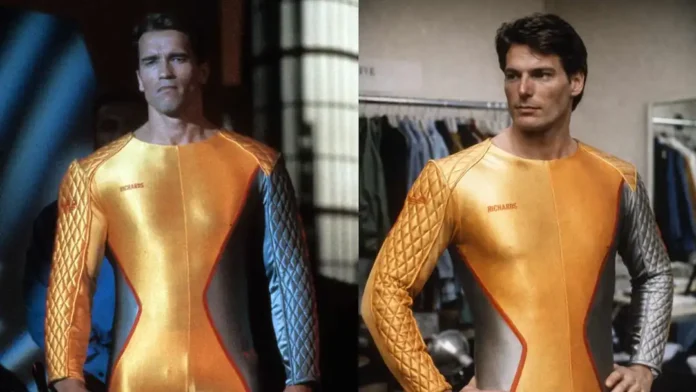
When The Running Man arrived in cinemas in 1987, it felt like a perfect distillation of late-80s action cinema: oversized violence, pitch-black satire softened by spectacle, and Arnold Schwarzenegger operating at full mythic scale.
But that film was not the one originally planned.
Before Schwarzenegger, before the neon-lit game show aesthetic, and before the parade of cartoonish Stalkers, The Running Man was developing as a much darker, more grounded adaptation of Stephen King’s novel. That version was built around Superman, Christopher Reeve, and, crucially, a very different director.
Reeve leaving the project forced a creative reset. What followed was not just a recast, but a redefinition of the film’s tone, politics, and visual language. And that shift was ultimately shaped by its new director.
We discussed 1987’s The Running Man on last week’s main Rewind show of the podcast which you can checkout here. And in this week’s Fast Forward episode we look at the new movie, Edgar Wright’s The Running Man (2025), which you can listen to above, or wherever you get your pods.

A Different Film for a Different Actor
Christopher Reeve was attached to play Ben Richards early in development, and his casting pointed clearly toward a more faithful interpretation of King’s novel.
This Richards was conceived as an everyman. Intelligent, moral, increasingly desperate. The story leaned into surveillance, propaganda, and psychological pressure rather than spectacle. Violence existed, but it was ugly and consequential, not performative.
Reeve’s presence suggested a dystopian thriller, not an action extravaganza.
Then Reeve exited the project due to scheduling conflicts. With his departure, the film lost the actor it had been structurally designed around and opened the door to a very different star.
YOU MIGHT LIKE: Terminator’s $24m mini T2 sequel & abandoned trilogies
Schwarzenegger Changes Everything
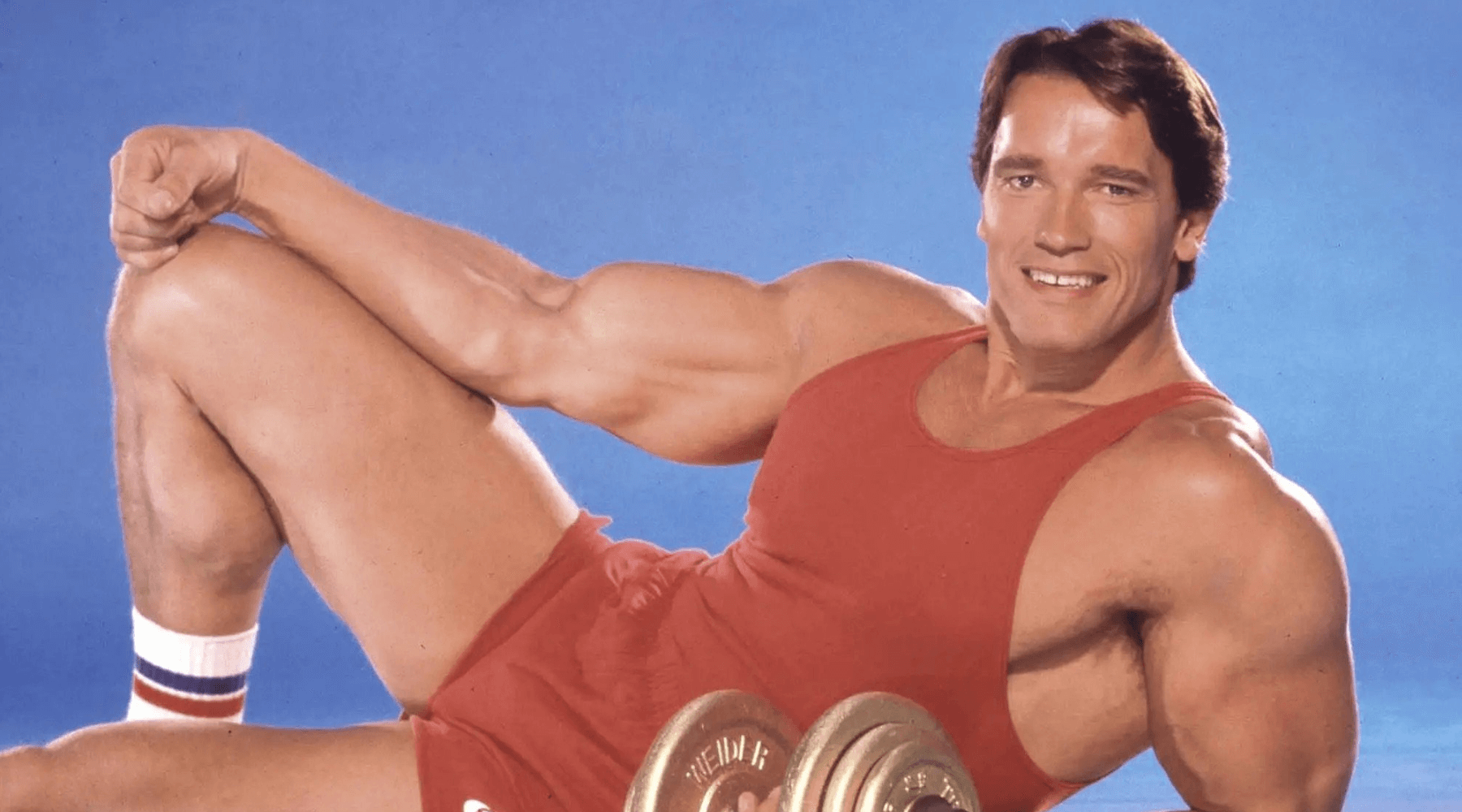
By the time Arnold Schwarzenegger stepped in, The Running Man could no longer be the same movie. In 1987, Schwarzenegger was not just an actor. He was a brand.
A grounded, paranoid dystopia built around moral ambiguity did not align with audience expectations of him. The studio knew it. The filmmakers knew it. The script was reshaped accordingly by Stephen De Souza (Die Hard) who said it went through 15 different drafts.
A bleak, grounded dystopia centred on an everyman did not survive the loss of the actor meant to embody it.
Ben Richards transformed from hunted civilian into defiant resistance hero. Big, muscly Arnie couldn’t (no matter how good his acting chops) play a weak, sick average Joe. The violence became theatrical. The satire broadened. The game show format was amplified into something closer to live-action comic opera.
READ NEXT: How The Terminator Was a Bargain in 1984 — And Where They Saved Every $
Enter Paul Michael Glaser
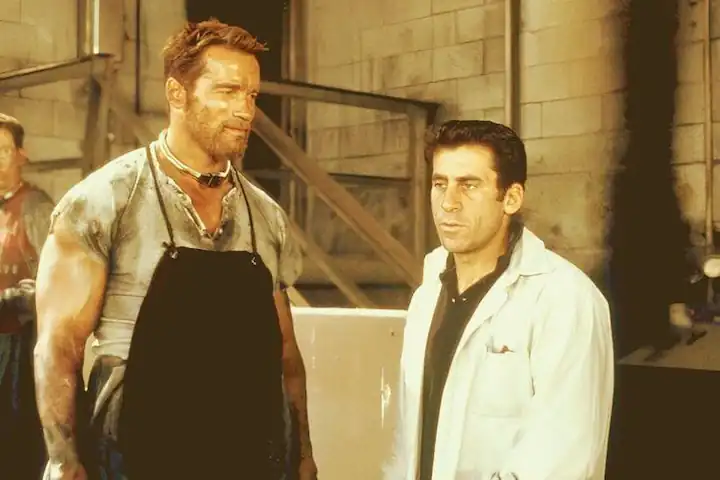
Following Reeve out the door was original director George P Cosmatos (Cobra, Rambo 2) and replacing him was Paul Michael Glaser. Yes, that Paul Michael Glaser.
Glaser was not a stylist in the auteur sense. He came from television, most famously Starsky & Hutch, and had a reputation as a fast, pragmatic director who could deliver on schedule and within budget. Glaser’s job was not to preserve Stephen King’s bleak vision. It was to make the film work.
Had Christopher Reeve remained attached, it is highly unlikely Paul Michael Glaser would have been the right director. The darker, more intimate adaptation that once existed required restraint, ambiguity, and discomfort.
Once Reeve left, that film effectively became impossible to make. Reeve’s departure didn’t just change the casting. It changed the film’s DNA.
** Here at Rewind Classic Movies we always want to be transparent about our use of AI and the image of Christopher Reeve in The Running Man suit was generated by AI to stoke our imaginations into picturing what that would look like. We hope you agree.
You can listen to the Rewind Classic Movies podcast about The Running Man 1987 right here or wherever you usually get your podcasts.
READ NEXT: The Running Man: Stolen Story, Arnie’s Changes and Bad One-Liners
 radically changed after Christopher Reeve lef. Here’s how the cast, new director and rewrites reshaped the film.)