
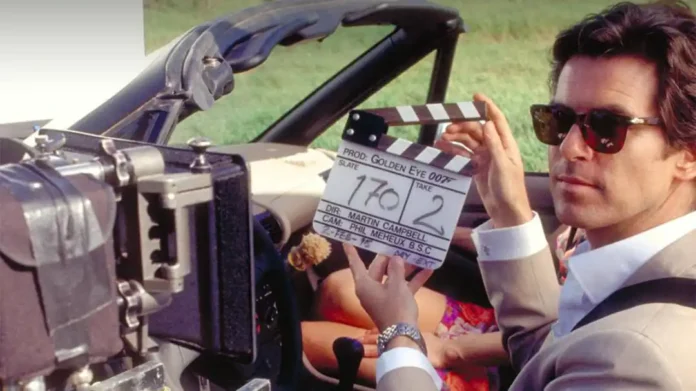
By 1995, James Bond was no longer the unstoppable cinematic fixture he once was.
A six-year absence, legal paralysis, and the end of the Cold War had left the franchise quietly vulnerable. When GoldenEye finally arrived, it carried the weight of expectation without ever acknowledging it on screen.
What followed was not a reinvention announced with fanfare, but a confident recalibration. GoldenEye assumed Bond still mattered and built its entire identity around proving that assumption correct.
You can listen to the Rewind Classic Movies podcast episode about Goldeneye wherever you get your pods or right here:
A Franchise Frozen In Time
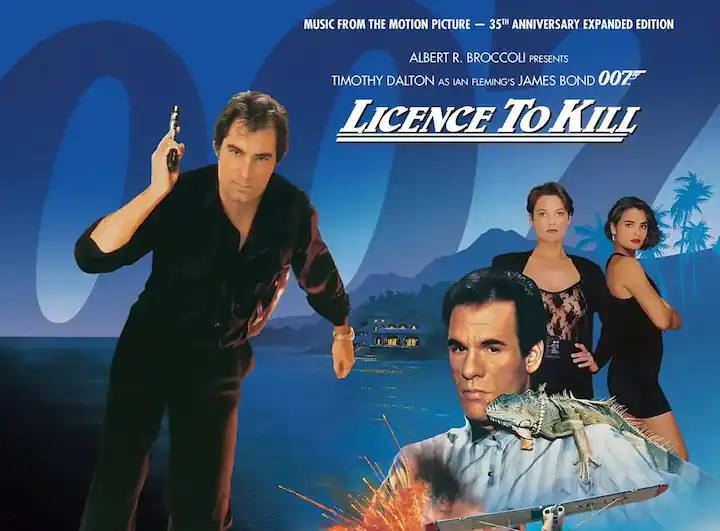
The gap between Licence to Kill and GoldenEye was not a creative pause. It was a legal stalemate that left one of cinema’s most reliable franchises completely dormant. As noted in the podcast:
“It was the first 007 film in six years, thanks to a load of legal troubles. On the back of five John Glenn films. And the first not to be produced by Cubby Broccoli, because he was having some health issues.”
In the early 1990s, action cinema evolved rapidly. Audiences embraced bigger spectacle, faster pacing, and increasingly self-aware heroes. Bond, meanwhile, was absent. When production finally resumed, the challenge was not simply to make another Bond film, but to make one that ignored the silence entirely.
The solution was strategic restraint. GoldenEye offers no explanation for the delay, no acknowledgement of absence. The film opens mid-mission, mid-confidence, as though Bond had never left. That decision reframed the six-year gap as irrelevant, placing the burden of belief on spectacle rather than exposition.
Brosnan As Continuity, Not Disruption
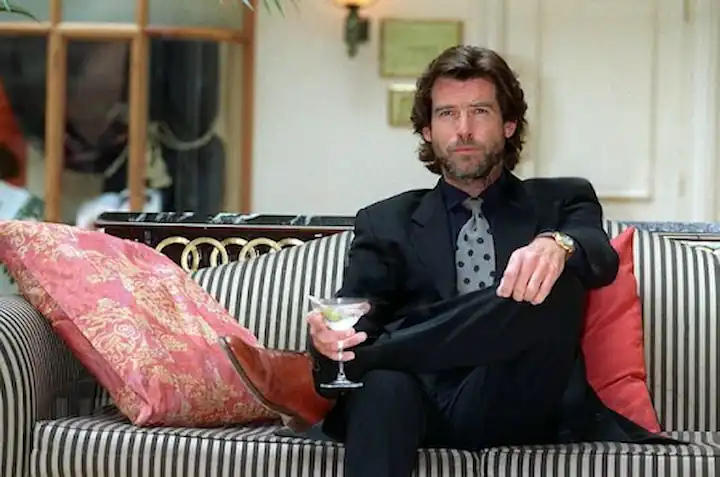
Pierce Brosnan’s introduction as Bond is often mischaracterised as a reboot moment. In reality, it was closer to a controlled handover. As discussed on the podcast:
“Craig seems much more revolutionary in its approach to reintroduce Bond, whereas Brosnan was much more an evolution of what came before. Behind the scenes, on set, Brosnan said: ‘there’s no ghosts of Sean, Roger or the 1960s‘.”
Behind the scenes, this distinction was intentional. Producers sought a Bond who could stabilise the franchise rather than challenge its foundations. Brosnan’s performance blends familiar traits: Connery’s authority, Moore’s ease, and Dalton’s edge, without leaning too hard into any single era.
The result is a Bond who feels instantly credible. There is no tonal adjustment period, no sense of experimentation. Brosnan arrives as Bond already formed, allowing the film to focus on momentum rather than reinvention.
READ LATER: Bond Directors Ranked!
Martin Campbell As An Unlikely Safe Pair of Hands
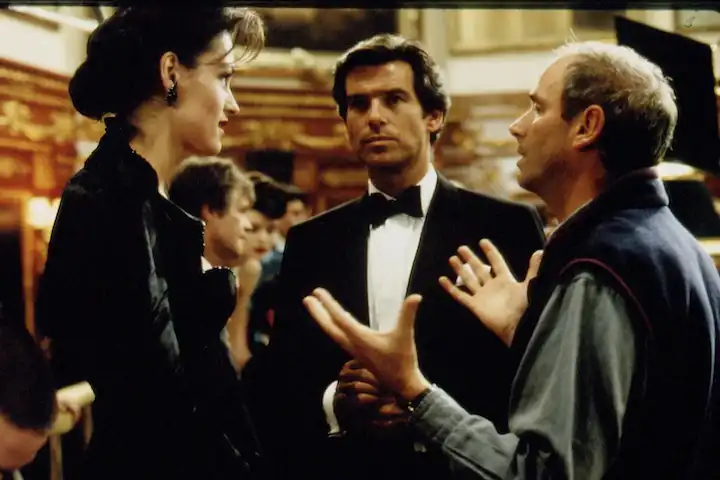
At the time of GoldenEye’s production, Martin Campbell was not an obvious choice to relaunch one of cinema’s most valuable franchises. As noted in the podcast, there is clear surprise at the decision:
“Martin Campbell is a strange choice when you actually look at what he’d done before this. There’s nothing in his history that screams ‘give him Bond’.”
Campbell’s career up to that point was eclectic rather than prestigious. He had directed television, genre thrillers, and character-driven dramas (and British sex comedies in the 70s), but nothing on the scale or scrutiny of a Bond film.
| YEAR | MOVIE |
|---|---|
| 1973 | The Sex Thief |
| 1975 | Three for All |
| Eskimo Nell | |
| 1976 | Intimate Games |
| 1988 | Criminal Law |
| 1991 | Defenseless |
| 1994 | No Escape |
| 1995 | GoldenEye |
| 1998 | The Mask of Zorro |
| 2000 | Vertical Limit |
| 2003 | Beyond Borders |
| 2005 | The Legend of Zorro |
| 2006 | Casino Royale |
| 2010 | Edge of Darkness |
| 2011 | Green Lantern |
| 2017 | The Foreigner |
| 2021 | The Protégé |
| 2022 | Memory |
| 2024 | Dirty Angels |
| 2025 | Cleaner |
| TBA | Just Play Dead |
Behind the scenes, this unconventional résumé became an advantage rather than a liability. Campbell was not burdened by franchise expectations or reverence for formula. Instead, he approached GoldenEye with a practical, almost procedural mindset, prioritising clarity, pacing, and physical realism.
This outsider status shaped the film’s tone. The emphasis on real stunts, restrained camera work, and controlled spectacle reflects a director focused on execution rather than legacy. It also explains why GoldenEye feels confident without being self-conscious.
In retrospect, Campbell’s lack of obvious pedigree proved crucial. He was willing to strip Bond back to fundamentals, reasserting credibility before style. That instinct would later resurface when he was again entrusted with reintroducing 007 in Casino Royale, confirming that the original gamble had paid off.
DID YOU MISS?: Denis Villeneuve to Direct Bond 26
An Opening Designed To Silence Doubt
Few Bond films carry as much responsibility in their opening minutes as GoldenEye. The pre-title sequence needed to introduce a new Bond, reassure sceptical audiences, and reassert the franchise’s physical credibility.
The podcast talks about the difficulty of comparing Bond openings across eras, comparing to Daniel Craig’s brutal introduction, but takes a moment to take in what they did with the audio and visual set up of Brosnan’s Bond:
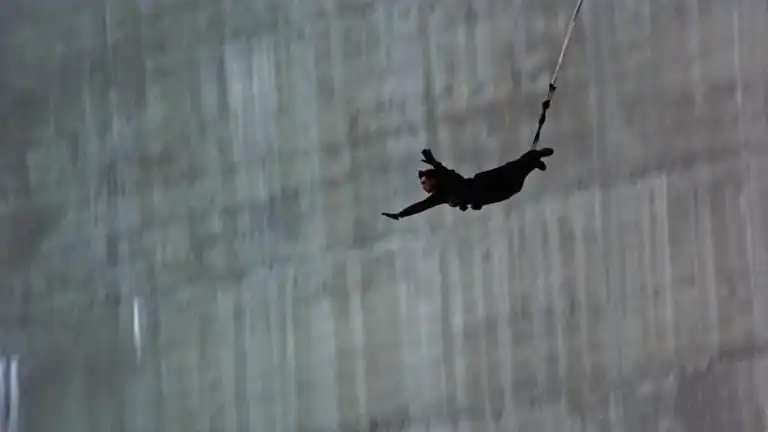
“It opens on this dam and it’s quiet. There’s this guy that just runs in along this dam. No music. You don’t see his face. You hear the bungee cord hitting the deck, and then just jumps off and it’s quiet. Nothing. No sound. The camera goes over his head...”
The dam jump was designed as a statement. Performed for real by stuntman Wayne Michaels, the sequence emphasises scale, risk, and physical consequence. Director Martin Campbell pushed for tangible danger rather than gadget-led spectacle, understanding that credibility mattered more than excess.
This philosophy defined the entire film. Practical stunts, controlled pacing, and spatial clarity became GoldenEye’s language, anchoring Bond firmly in a world that still obeyed gravity.
If you’re mad enough, you can now also pay £180 to do the bungee jump yourself off the same bridge. Wayne was apparently pretty terrified of doing it so why any non-stunt human would want to do it is beyond us. You can find out more and book here.
Betrayal As Narrative Escalation
One of GoldenEye’s most significant departures from tradition was its decision to centre the villainy around a former 00 agent (something we’d love to see more of! -Ed). Alec Trevelyan’s betrayal reframed Bond’s conflict as internal rather than purely ideological.
The podcast highlights the film’s enduring quotability with so many great lines (and some bad ones) written for Sean Bean:
“For England james? Closing time, James! Last call. Tastes like… like strawberries. It’s the entire script. I mean, the entire script.”
Casting Sean Bean as 006 was a calculated risk. Bond villains had historically existed outside Bond’s emotional orbit. By making Trevelyan a former ally, GoldenEye introduced personal consequence without softening the protagonist. Shame they ruined the betrayal in the trailer.
This narrative choice quietly laid groundwork for later Bond films, particularly those that would further explore loyalty, betrayal, and institutional decay.
COME BACK FOR: The James Bond Theory That Rewrites The Rock (1996)
Eric Serra and The Music
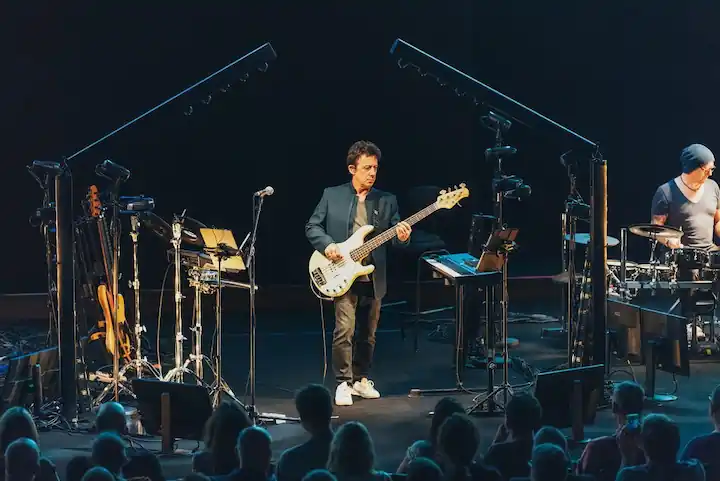
One of GoldenEye’s most enduring talking points has nothing to do with stunts or casting, but sound. Eric Serra’s score marked a sharp departure from traditional Bond music, and the podcast discussion reflects just how divisive that choice remains.
As noted during the episode (in which GB and AJ constantly argue about it, with GB being the hater):
“The music doesn’t sound like Bond at all. It sounds wrong. Every time the music comes in, it takes me out of it. It feels like it belongs in a completely different film.”
That difference was deliberate. Serra, fresh from collaborations with Luc Besson, approached GoldenEye with a contemporary, electronic palette that reflected the uncertainty of the post–Cold War world. Instead of sweeping brass and instantly recognisable motifs, the score leans into synthesised textures, industrial rhythms, and uneasy atmospheres.
Behind the scenes, Serra’s approach was controversial enough that parts of the score were replaced late in production, most notably the tank chase music, which producers felt lacked momentum. Even so, much of Serra’s original work remained intact, ensuring GoldenEye sounded unlike any Bond film before or since.
[GB here. If anyone is willing to write an article defending the absolute wrongun that is this soundtrack, I’d love to publish it. It’s bad enough in the movie, but I just tried listening to it as a piece of music. Appalling. Someone back up AJ’s confessed unfair backing of this mis-step. It’s just the wrong music in the wrong film.)
🎧 Companion Podcast Episode & BTS Photos
This article accompanies the latest Rewind Classic Movies episode, which explores GoldenEye’s legacy, debates Bond openings, and examines why Brosnan’s debut still feels so complete. You can listen for free wherever you get your podcasts, or at the top of this article.
LISTEN TO OUR GOLDENEYE WATCHALONG COMMENTARY, ONLY ON PATREON
If you want to support what we do here at Rewind Classic Movies, you can join our Patreon for $5 a month which goes a long way to help the costs of making the show and the website. Other ways to help for free are to share with someone, give a like, leave a review or a comment or anything else that helps more people find out about it. Thank you.
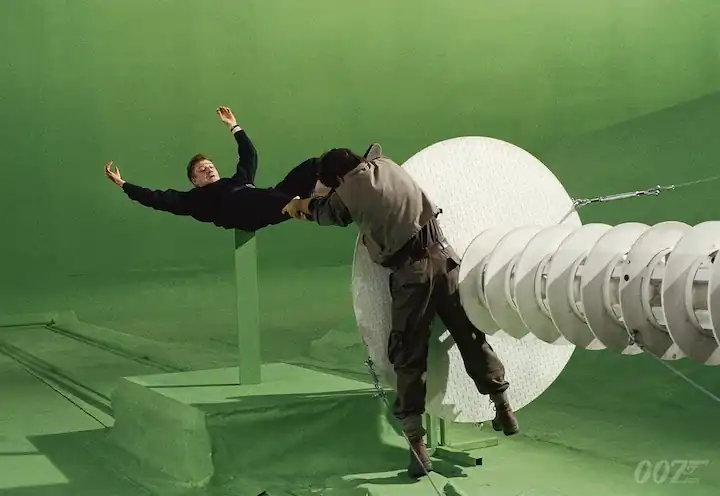
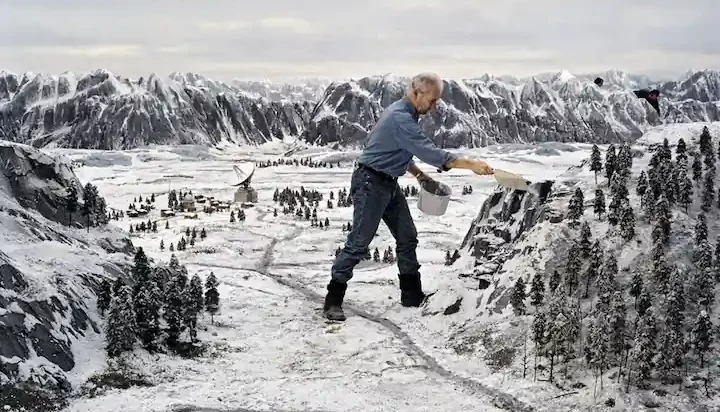
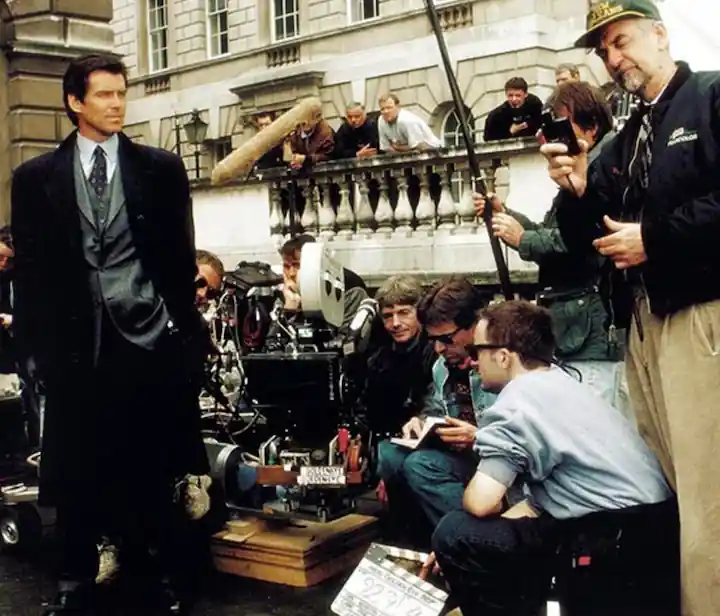
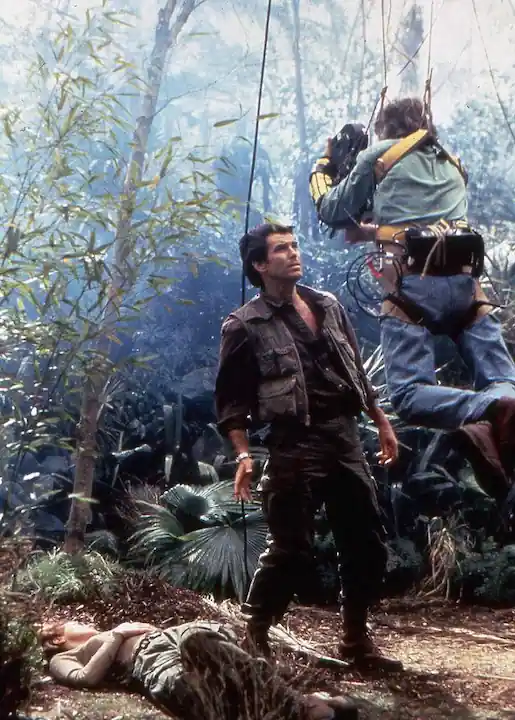
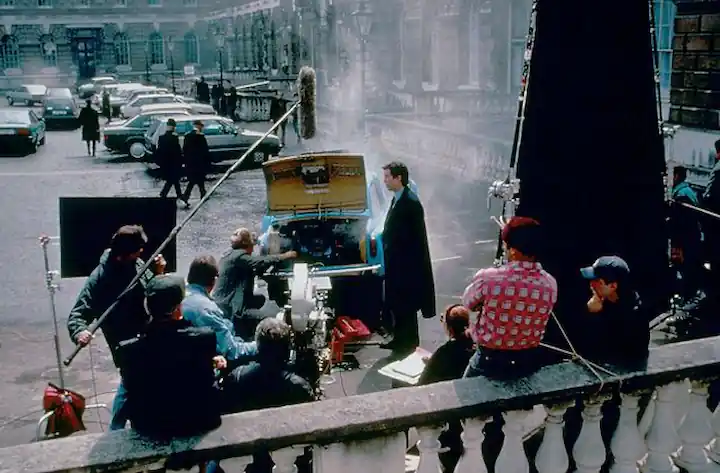
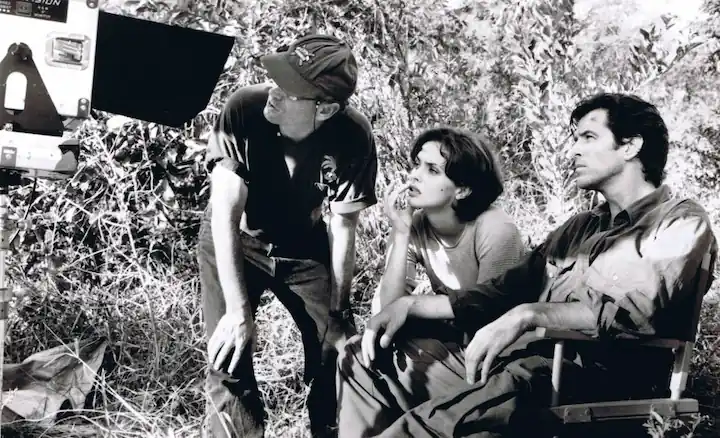
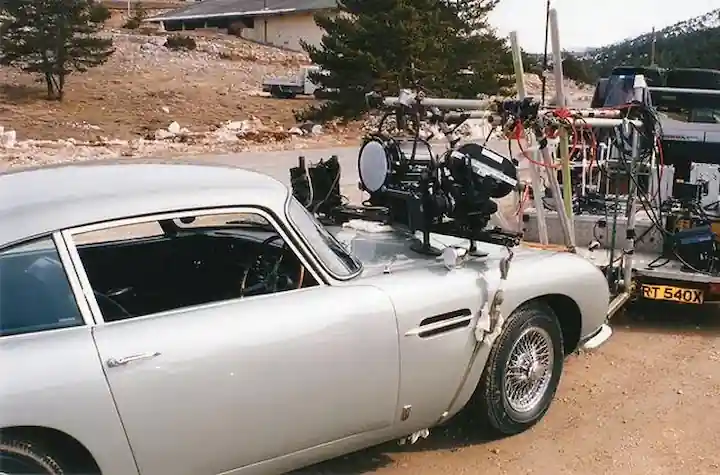
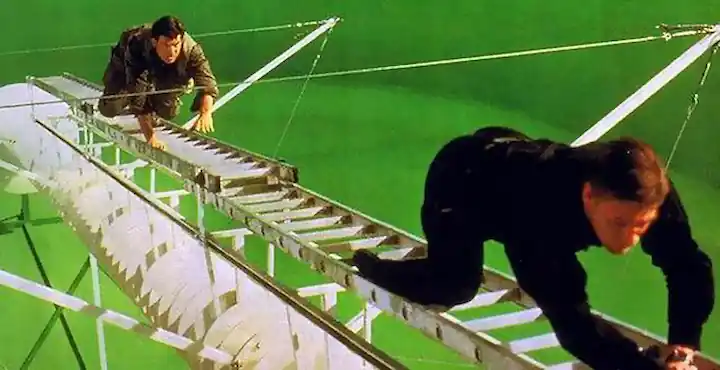
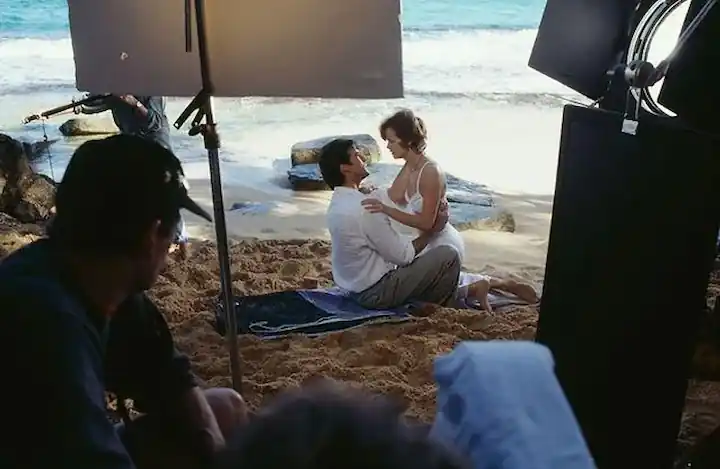
We will leave you with some extra Behind The Scenes images from the making of Goldeneye (click for larger).
CLICK NEXT: Sydney Sweeney may be the next Bond girl
 brought James Bond back after six years away. Behind-the-scenes insights and why Brosnan’s debut still matters.)