
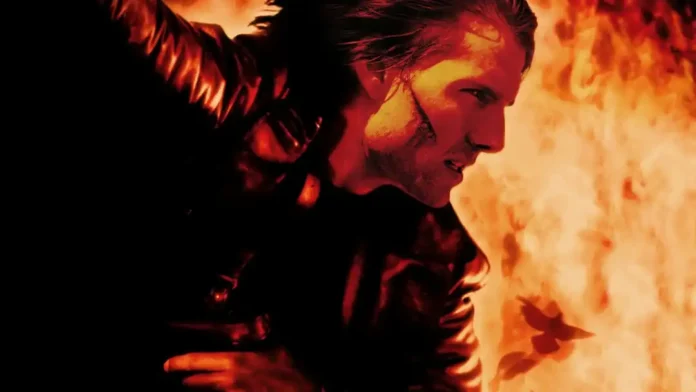
When Mission: Impossible 2 arrived in cinemas in May 2000, it wasn’t just another blockbuster sequel. It was a dramatic reinvention of the franchise.
Directed by Hong Kong action maestro John Woo, the film swapped the tense espionage thriller style of the original for slow-motion gunfights, motorcycle duels and doves dramatically flapping through explosions.
The result? A hugely successful film that divided critics and fans – and still sparks debate today. Released at the start of a new millennium, Mission: Impossible 2 captured the style, attitude and excess of blockbuster filmmaking at the turn of the century.
You can listen to the full Rewind podcast episode about Mission: Impossible 2 right here in the player or wherever you get your podcasts – Apple Podcasts, Spotify, Amazon Music or more.
A Massive Box Office Hit
Despite mixed reviews, Mission: Impossible 2 was undeniably a commercial juggernaut.
- Budget: $125 million
- Worldwide Box Office: $546 million
- Year: 2000’s highest-grossing film
The sequel also became the highest-grossing film of John Woo’s career and cemented Tom Cruise’s action-star status at the start of the 2000s. But while audiences showed up in droves, the film’s radical shift in tone left some viewers wondering if the franchise had gone too far into stylised spectacle.
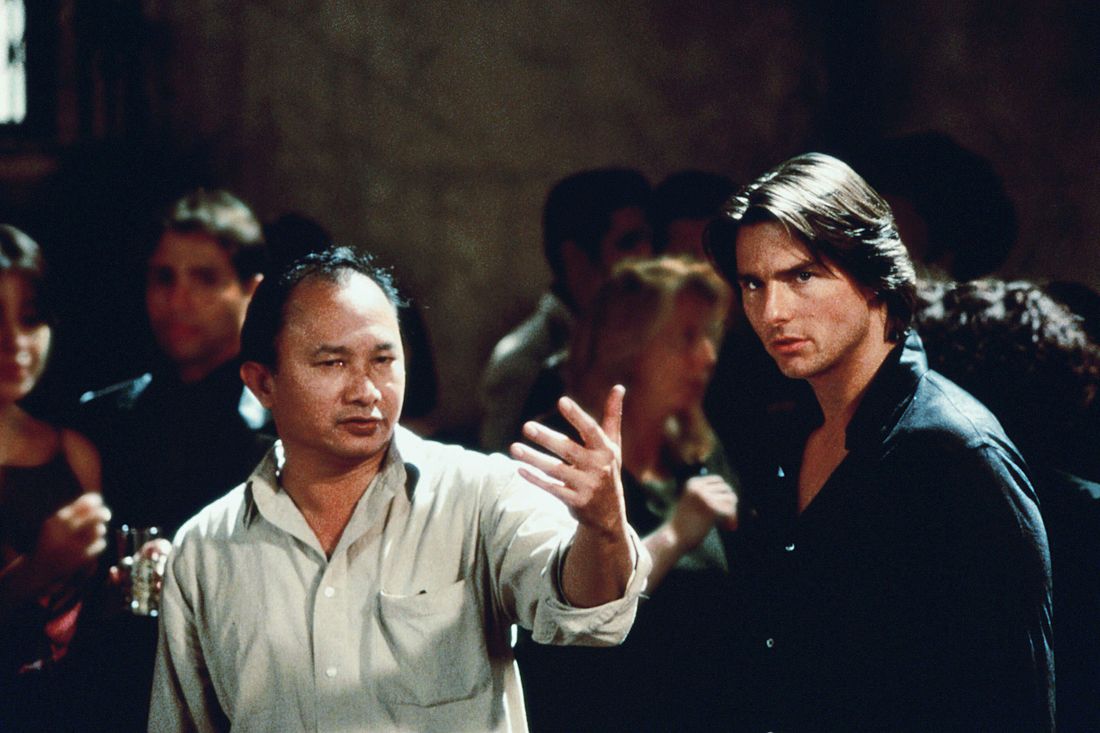
John Woo Turns Mission Impossible Into an Action Opera
The first Mission: Impossible (1996), directed by Brian De Palma, was a suspense-driven espionage thriller built around deception, paranoia and clever twists.
Woo had other ideas. His signature style dominates every frame: slow-motion action, dual pistols, dramatic doves, stylised gun battles, motorcycle duels and exaggerated hero poses.
For some fans, this approach made the sequel feel like a two-hour music video. For others, it transformed the franchise into pure popcorn entertainment. Either way, there’s no mistaking whose movie it is.
READ NEXT: 10 Best Tom Cruise Movies According to Film Fans
Tom Cruise’s Most “Rock and Roll” Ethan Hunt
Tom Cruise returns as IMF agent Ethan Hunt, but this version of the character feels very different from the one audiences met in the first film.
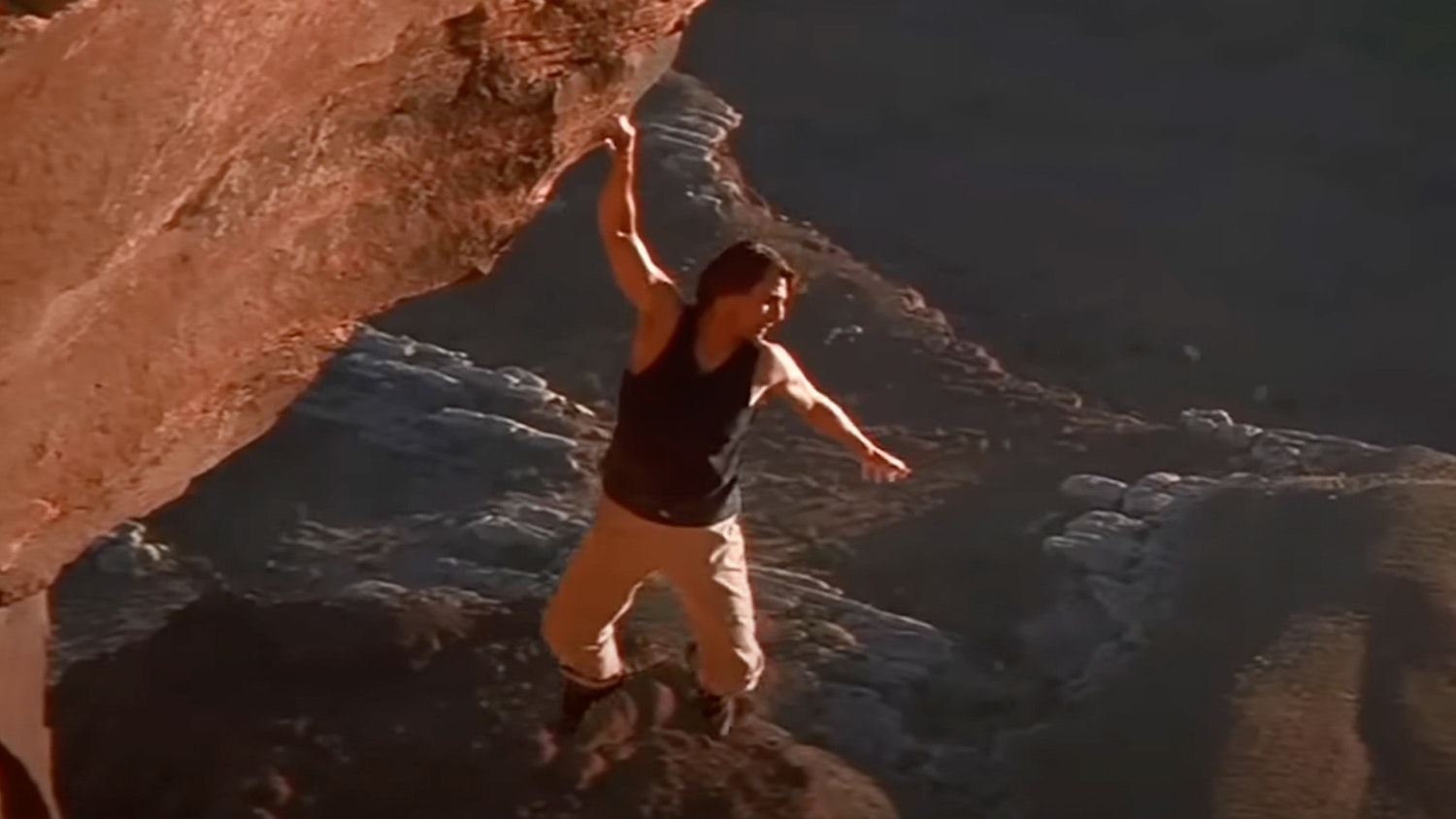
The clean-cut spy has been replaced by a long-haired action hero who rock climbs without ropes, rides superbikes and dives through the air in slow motion.
The film opens with an unforgettable sequence: Hunt free-climbing towering cliffs in Utah before receiving his next mission via a pair of exploding sunglasses.
The moment set the tone perfectly for the rest of the film. It’s outrageous, stylised and very, very 2000.

The Plot: Viruses, Betrayal and Masks
At the centre of the story is “Chimera,” a deadly virus stolen by rogue IMF agent Sean Ambrose (Dougray Scott).
To stop him, Ethan recruits Ambrose’s former lover Nyah Nordoff-Hall (Thandiwe Newton), a professional thief who must infiltrate Ambrose’s circle. The plot mixes classic spy elements with action spectacle: double agents, identity masks, global bio-terror stakes, high-speed chases, explosive shootouts
But while the premise is simple on paper, the film’s constant twists and identity reveals make it surprisingly convoluted. And as GB and AJ say on the podcast, the masks just make it bloody exhausting and underwhelming because you can never trust anything you see.
TOM CRUISE: 8 Actors Who Almost Played Daniel LaRusso in The Karate Kid

The Action: Bigger Doesn’t Always Mean Better
For a film remembered for its action, Mission: Impossible 2 is surprisingly light on set pieces.
The ones that do appear, however, are undeniably memorable:
- the opening rock-climbing sequence
- a high-speed car chase inspired (?) by GoldenEye
- the motorcycle duel finale
- a brutal hand-to-hand fight on the beach
Some moments, like the knife stopping millimeters from Cruise’s eye, were filmed practically, demonstrating Cruise’s commitment to stunt work even early in the franchise.

The Soundtrack That Defined 2000
The film’s marketing leaned heavily into the era’s rock and nu-metal scene. Two songs in particular became closely associated with the movie were “I Disappear” by Metallica and “Take a Look Around” by Limp Bizkit.
Both tracks appeared in promotional material and music videos tied to the film.
Ironically, though, they appear only briefly within the movie itself. Or not even the movie if you consider Metallica play in the credits and Bizkit barely scrape a small part in towards the end of the credits.
The score was composed by Hans Zimmer, who blended orchestral themes with rock influences to match the film’s heightened style but wasn’t happy with the choice of bands representing the movie and requested female-fronted rock.
MORE MUSIC: This Is Spinal Tap (1984): Cock, Rock AND Roll!

A Divisive Entry in the Franchise
Even today, Mission: Impossible 2 remains one of the most debated films in the series.
Some fans appreciate its over-the-top spectacle and unmistakable style. Others see it as the franchise’s weakest installment.
What’s undeniable is that the film forced the series to evolve. The next entry, Mission: Impossible III, would move back toward character-driven storytelling while keeping the large-scale action audiences expected.
Although often ranked near the bottom of the franchise, Mission: Impossible 2 played a crucial role in shaping what the series would become.
Without it the franchise might not have leaned so heavily into blockbuster action, Tom Cruise might not have become synonymous with increasingly daring stunts and the series might never have grown into the massive global phenomenon it is today
Messy, excessive and unmistakably of its time, Mission: Impossible 2 remains a fascinating snapshot of early-2000s action cinema.
FAST FORWARD: 10 Best Tom Cruise Movies According to Film Fans
 transformed the franchise with John Woo’s slow-motion action style. A box office hit but critical divider.)