

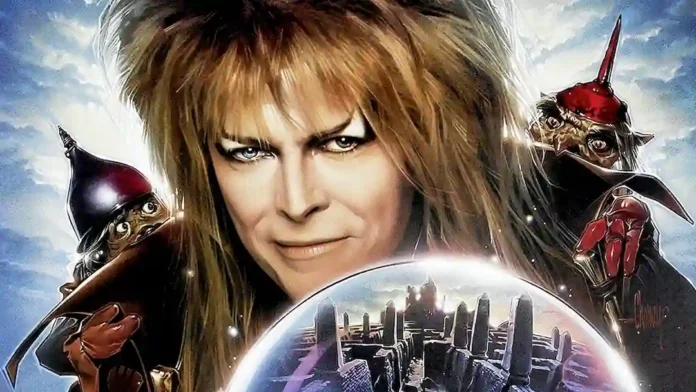
, exploring its puppetry, themes, and coming-of-age story in this thoughtful fan review.)
By Kat, Patreon supporter
Watching this again for the first time in far too long, it felt like stepping into a strange, dreamlike fairy tale.
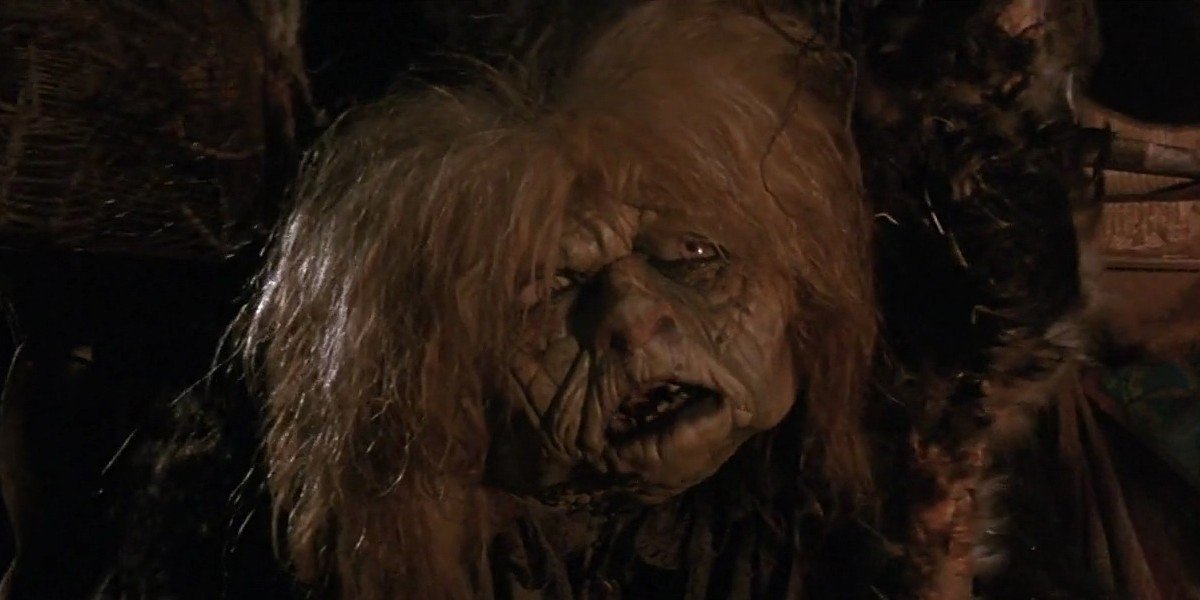
The film is visually stunning; its greatest strength is its extraordinary puppetry and creature design. The inhabitants of the labyrinth feel wonderfully tangible, giving the world a whimsical quality that modern CGI rarely captures.
But the film does, at times, feel disjointed. Instead of a tightly structured plot, the story unfolds as a sequence of strange encounters, riddles, and puzzles. Yet this wandering structure echoes older fairy tales, like those of the Brothers Grimm, where characters must navigate enchanted landscapes filled with trickster creatures and shifting rules.
[You can listen to the full Rewind podcast below where GB and AJ look back on the 1986 movie – or find it wherever you normally get your podcasts, whether that’s Apple Podcasts, Spotify or others]
The Darker Themes Beneath the Whimsy
Running under the surface of the puppets and whimsy is a darker fairy tale theme. The Goblin King (David Bowie) tempts the heroine (Jennifer Connelly) with fantasy and power, using coercion rather than brute force, echoing folklore about faerie kings and queens who lure mortals into their realms, a theme explored through literature from Shakespeare (A Midsummers Night) to Pratchett (Lords and Ladies and the Tiffany Aching series) and beyond.
The labyrinth itself is a place where identity could easily be lost, a magical landscape that threatens to swallow those who wander too far.
Rewatching it made me notice that some objects in Sarah’s bedroom at the start hint at many of the characters she later meets, from a knightly toy resembling Sir Didymus to imagery that recalls the gentle giant Ludo. A print even anticipates the impossible staircases of the Goblin King’s castle, where Sarah is trying to reach Toby.
This leads me to the obvious: the labyrinth is a world built from Sarah’s own imagination. It is a journey through childhood fears, fantasies, and the process of growing up, turning the film from pure fantasy into a coming-of-age story about confronting fears, temptation, and the transition from childhood into young adulthood.
MORE OPINION: Bayhem: Why Michael Bay Deserves More Respect

“You Have No Power Over Me” – A Defining Moment
The ending, where she realises she has control over events and dispatches the Goblin King with the simple phrase, “You have no power over me,” is, to me, a sign she is accepting this change. She goes from a stroppy teen raging at her lot in life to a young lady who is accepting her place in the family, but can still allow childlike fun in her life, with the rather odd dance party at the end.
David Bowie brings undeniable charisma to the Goblin King. His performance is naturally theatrical and perfect for a character drawn from old faerie folklore, charming, manipulative, and faintly dangerous. His songs are perfect for the film, surreal and haunting at times.
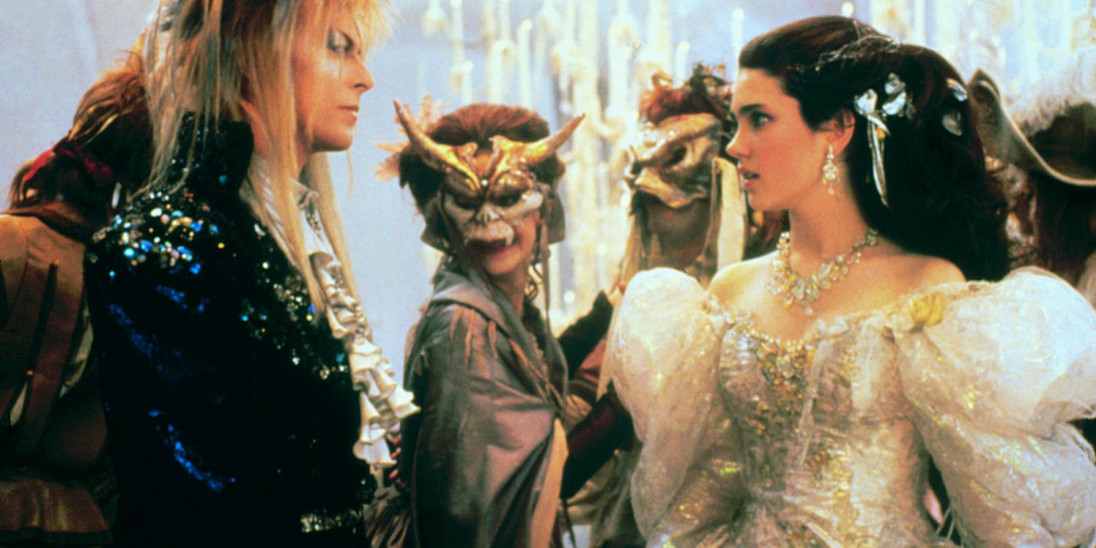
Jennifer Connelly is slightly stilted; however, she was very young during filming [Just 14], so it’s an observation rather than criticism. She has moments when she comes alive, the ballroom scene comes to mind.
YOU MIGHT LIKE: Behind the Fishnets: 15 Rocky Horror Facts You Never Knew
Final Verdict: Imperfect but Enchanting
If you want a perfectly structured film, it will disappoint. But embrace the strange, disjointed, yet enchanting journey through puppetry, folklore, and dream logic, and it’s a charming film.
I wasn’t sure how I would rate this before watching again, but the fact I watched it twice this week and will watch it again soon means it’s S tier for me.
DON’T FORGET: LISTEN TO THE FULL REWIND PODCAST WITH GB AND AJ HERE (or wherever you usually listen)