

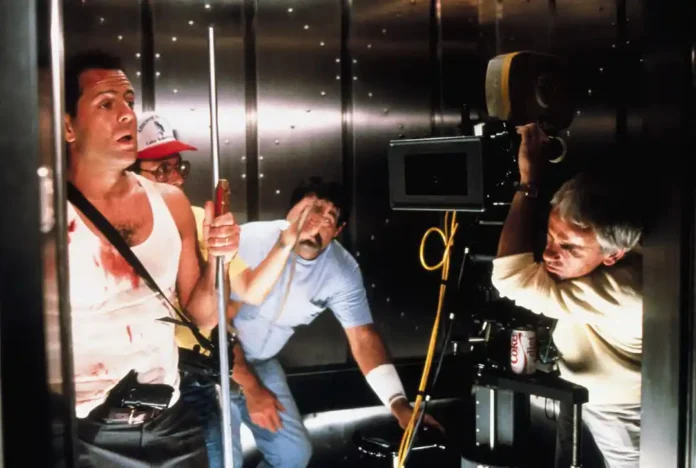

Few action films have earned the kind of timeless status Die Hard enjoys.
Released in 1988 and directed by John McTiernan (fresh off Predator), the movie redefined the action genre, launched Bruce Willis into superstardom, and gave cinema one of its most charismatic villains in Hans Gruber.
This companion guide expands on the conversation from the Rewind Classic Movies podcast’s Season 2 premiere. Whether you’ve listened to the episode or you’re discovering Die Hard anew, here’s the ultimate breakdown of why the film continues to hit as hard now as it did almost four decades ago.
You can listen to the show below or wherever you get your pods (links to players like Apple Podcasts and Spotify at the end of the article):
John McClane: Reinventing the Action Hero
Action cinema in the 1980s was dominated by muscle-bound supermen – Rambo, Commando, and a litany of human tanks. Die Hard introduced something bolder: vulnerability.
The film opens on a passenger plane touching down in Los Angeles. A man grips the seat in front of him, nervous and uncomfortable. This is our hero.
McClane feels relatable because he is flawed. He’s exhausted, emotionally frayed, anxious, and totally unprepared for what’s about to unfold. His vulnerability doesn’t weaken the film – it elevates it, making every scrape, cut, and desperate decision matter.
The human core of McClane’s journey is reinforced by the film’s early scenes: a brief reunion attempt with his estranged wife, Holly; his awkward conversation with limo driver Argyle; and his growing discomfort in the polished corporate world of Nakatomi Plaza.
The setup is simple but emotionally grounded. McClane might be an action hero but he begins as a husband trying to make things work.
Podcast Moment
“We kick off with this vulnerable guy who doesn’t like flying and he’s got a teddy bear … they’re almost hitting you over the head with a sledgehammer of like, this is not a hero. This is not a cliched hero. This guy’s got vulnerabilities.”
READ LATER: The 11 Most Underrated Movies of the 1980s That Deserve A Rewind
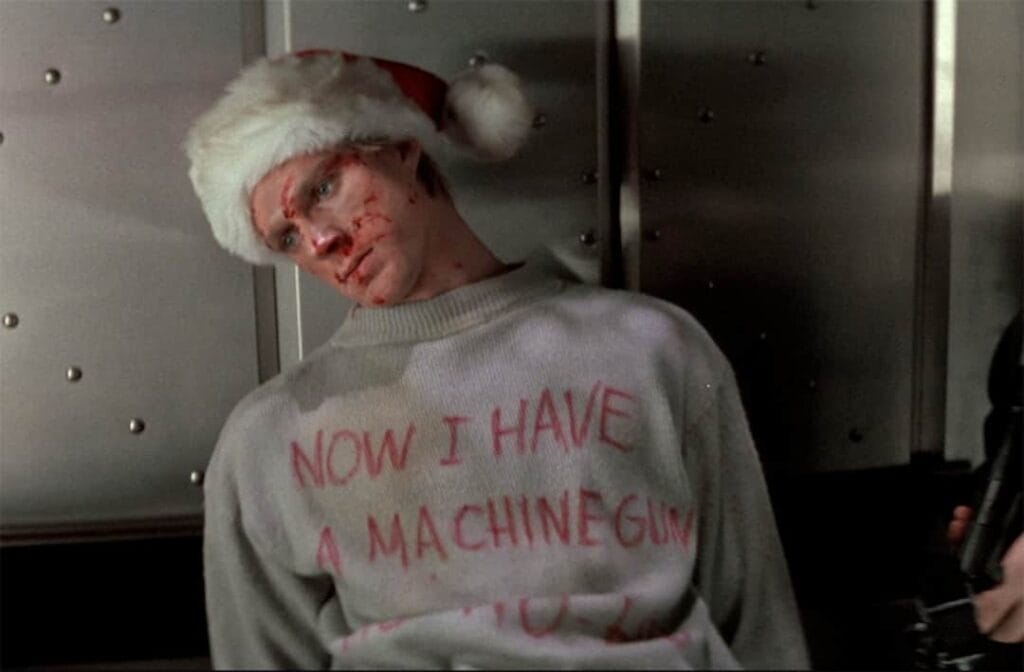
Is It a Christmas Movie? The Debate Lives On
The Die Hard Christmas debate is a tradition in itself at this point, and the episode dives into this headfirst.
From “Christmas in Hollis” playing in Argyle’s limo to festive decorations lining Nakatomi Plaza, the movie commits to its seasonal backdrop. And yet, as highlighted on the show, public opinion remains fractured.
A YouGov poll of more than 5,000 British citizens showed that only 31% believed it’s a Christmas film. Which is crazy. And it’s not the “youth” who are skewing the stats. It’s the over 50s who don’t see the festive magic in the Towering Inferno-inspired office chaos.
Whether you agree or not, the holiday framing enhances the film’s tone and creates a juxtaposition between seasonal cheer and explosive violence that remains uniquely compelling.
Podcast Moment
“There’s Christmas music everywhere in this movie.
There’s Christmas everywhere. It’s a Christmas movie.”
How Die Hard Came to Be: Adaptation, Rewrites & Chaos
The film’s development history is famously tangled and the podcast conversation unpacks it.
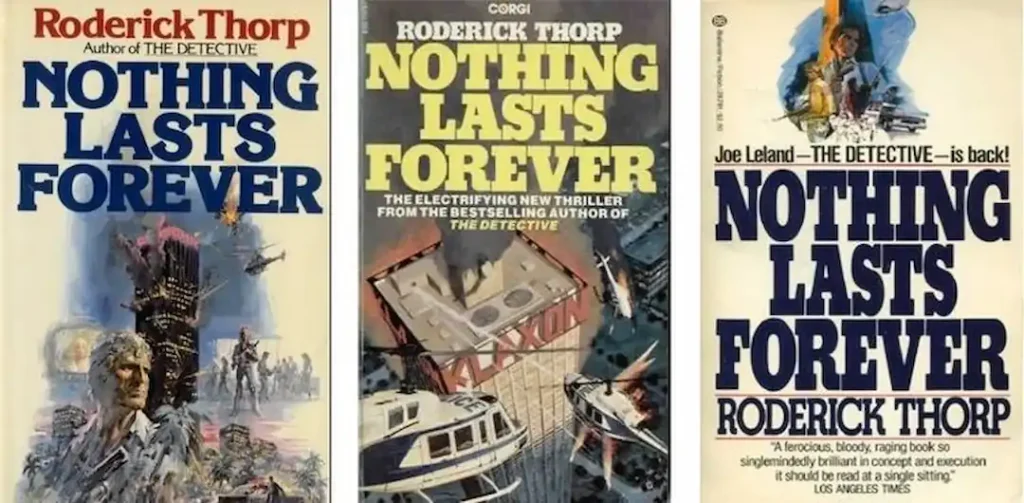
The story began as Nothing Lasts Forever, a 1979 novel by Roderick Thorp, itself a sequel to The Detective. Because the original adaptation starred Frank Sinatra, the studio was contractually obliged to offer him the lead role. But by the time it was happening, Frank was too old. So it went to an up and coming TV star.
Bruce Willis was shooting Moonlighting simultaneously, working on the show by day and the film at night or on weekends. Director John McTiernan insisted the story unfold over one intense night, rejecting the original multi-day timeline.
Screenwriter Stephen de Souza was brought in to rewrite the script and he approached it from the point of view that Gruber was the protagonist. This structural choice – treating Hans as the story’s engine – helps explain the film’s unusually rich villain.
Podcast Moment
“The script wasn’t finished when they started filming, not by a long way.
I don’t even think they had half the amount of pages they needed.”
Foreign Titles: When Die Hard Goes Global
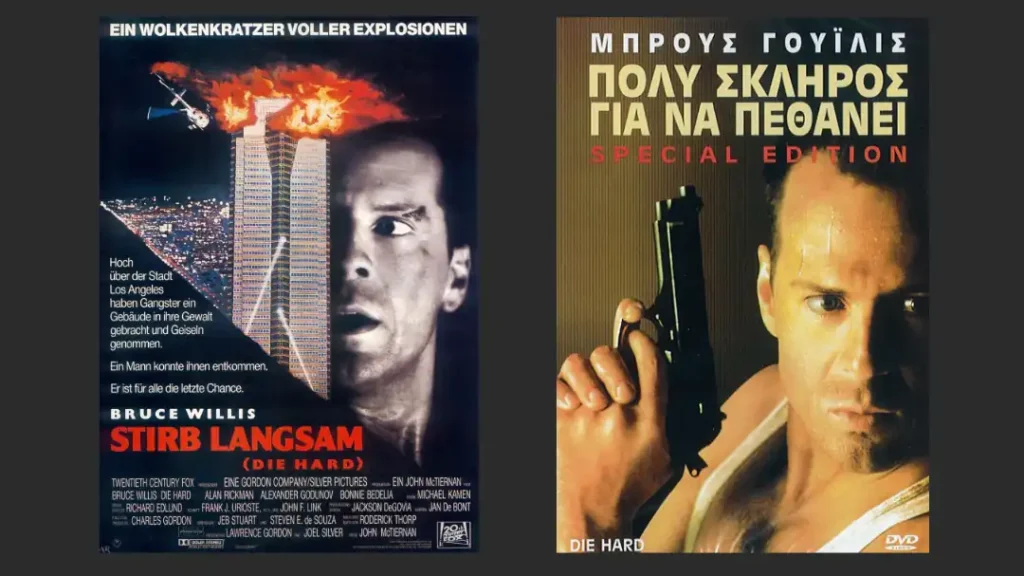
The podcast’s chaotic Germany/Greece mix-up was the usual level of professionalism – so here’s the expanded, organised version.
Here’s how the film was titled around the world:
| Country | Title | Literal Translation |
|---|---|---|
| Germany | Stirb Langsam | Die Slowly |
| Greece | Πολύ Σκληρός Για Να Πεθάνει | It’s Very Hard to Die |
| Spain | Jungla de Cristal | Crystal Jungle |
| France | Piège de Cristal | Crystal Trap |
| Poland | Szklana Pułapka | Glass Trap |
| Hungary | Drágán add az életed! | Give Your Life Expensively! |
| Hong Kong | 虎胆龍威 | Tiger Guts, Dragon Might |
These titles reveal the film’s global adaptability. Some territories emphasised spectacle (Crystal Jungle), others the danger (Glass Trap), and others embraced melodrama or martial-arts flair.
Podcast Moment
GB: “You text me and said ‘I’m dying slowly in Germany,’ followed by ‘you can’t die quickly in Greece’…
and then it just got very confusing.”
AJ: “I called you a twat, I think…”
AFTER THIS: Naked Gun (1988) shaped the humor of an entire generation
Hans Gruber: The Cultured Killer
Alan Rickman’s performance remains one of cinema’s most iconic villain roles. This perfect balance of charisma and brutality is why Gruber endures as one of film’s greatest antagonists.
Here’s some quick-fire facts about Rickman/Gruber:
1. Die Hard was Alan Rickman’s first feature film
He’d had a long stage career in the UK and his breakthrough West End/Broadway performance was as Valmont in Les Liaisons Dangereuses. A Hollywood action movie was not the expected next step.
2. He was cast only days after arriving in Los Angeles
He had barely landed when he auditioned. The producers saw him once and immediately recognised that he had the intelligence and gravitas the role needed.
3. Rickman initially wanted to turn the role down
He felt the script read like a “villain in a standard action picture” and worried it would stereotype him. Thankfully for humanity, he took it.
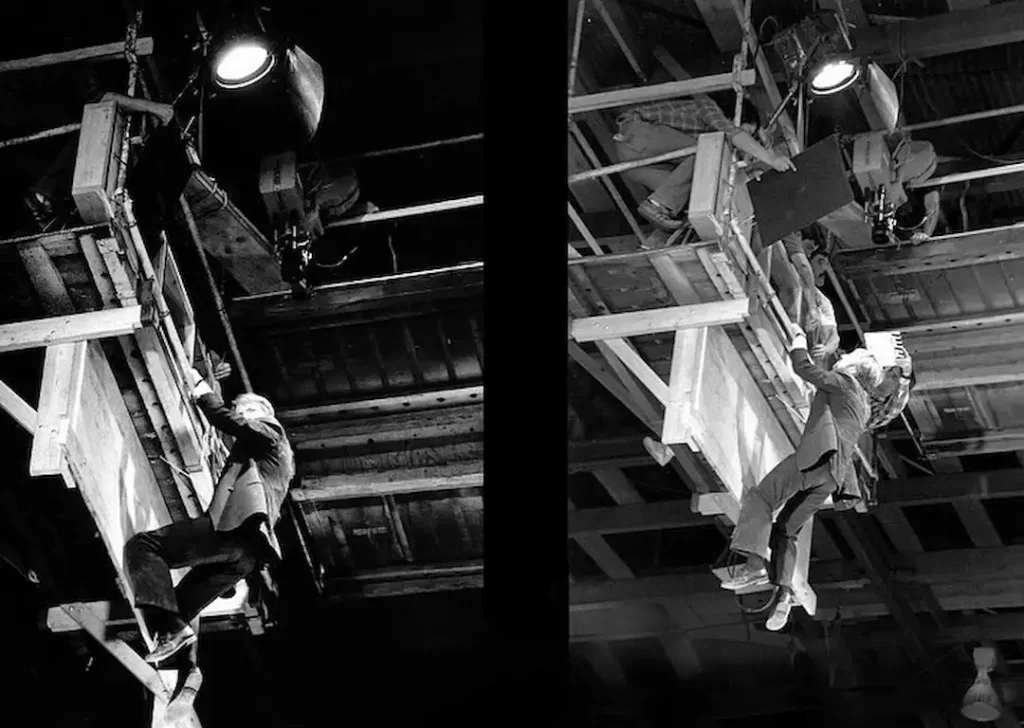
4. The iconic ‘fall’ reaction was real
For the shot where Gruber plummets from Nakatomi, the stunt team dropped Rickman one second earlier than he expected so the look of shock would be genuine. It worked a little too well.
5. The “American accent” scene was improvised on-set
The moment where McClane finds Hans on the unfinished floor and Rickman pretends to be an American hostage (“Oh God, you’re one of them, please don’t kill me!”) wasn’t in the original script. It was added when the crew discovered Rickman could do a convincing American accent.
6. Gruber’s wardrobe was chosen to contrast McClane
Sharp suit vs sweat-stained vest. McTiernan wanted Gruber to look like the kind of man who would never fire a gun unless absolutely required … which is what makes it more terrifying when he does.
7. He broke himself on day one
He told Elle in 1988: “It was my first day and my first scene in any movie, ever, in Hollywood, at night, and I was also having to produce an American accent in front of an American crew, so maybe I was a little…tense! There was steam blowing in my face and boiling hot water dripping on my ankle and I had to jump down from a ledge to uneven paving stones. Well, on about take 10 or 11 I heard something rip, but it wasn’t my clothes – it was the inside of my knee. This torn cartilage is my souvenir of Hollywood.”
Podcast Moment
“He’s so down to earth … he’s whistling Ode to Joy in the lift but he’s a stone cold killer.
He kills Takagi, he orders his men to shoot multiple rockets at the tank to kill the cops and he shoots Ellis in the face.”
Iconic Scene: “Shoot. The. Glass.”
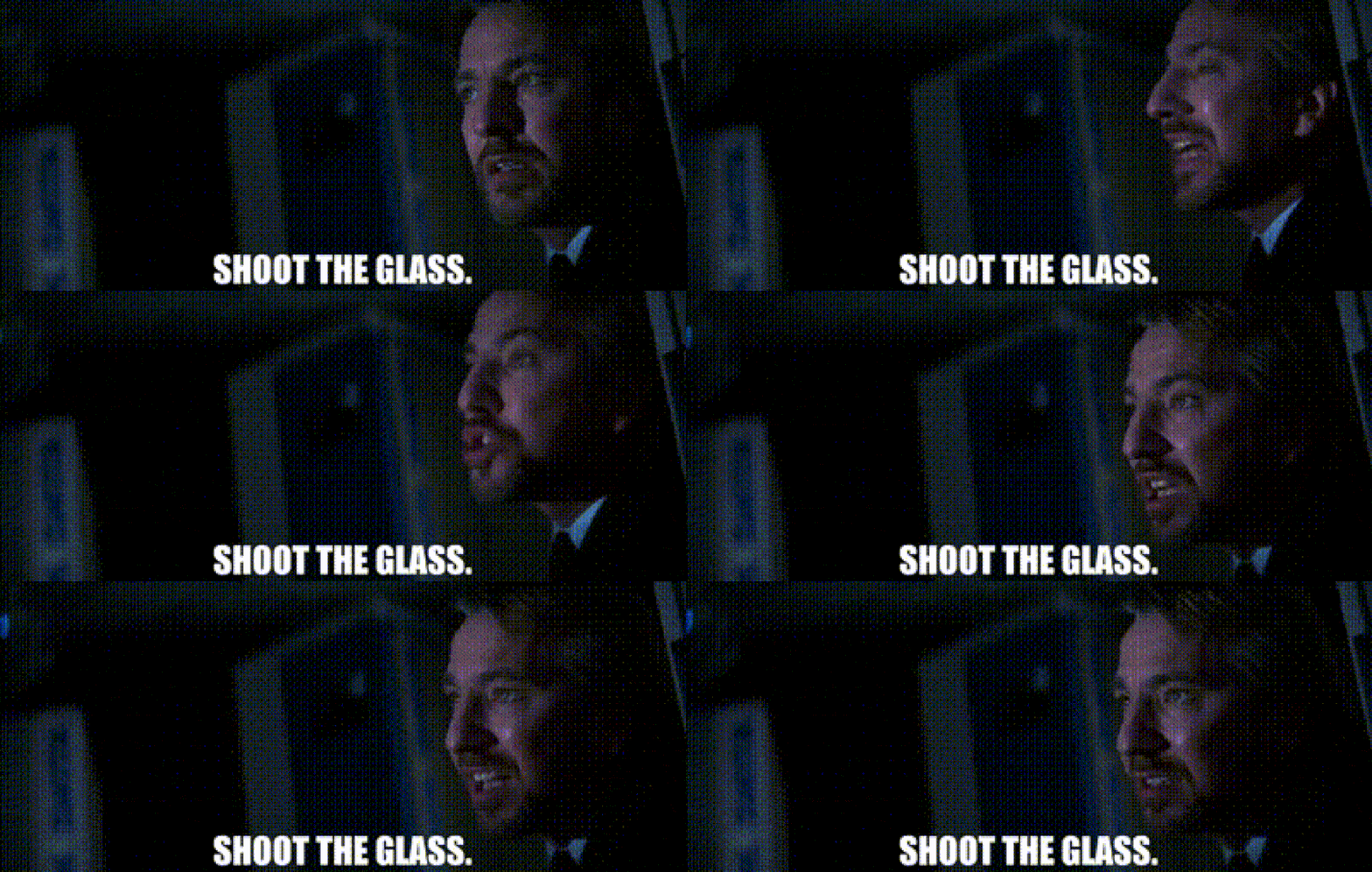
Few lines in the film are as often quoted as Gruber’s furious command.
But Rickman refused to deliver one of the movie’s iconic lines. He was meant to shout “shoot the glass” but Rickman thought: “No man that clever would shout like a fool.” So whispered it instead and the dialogue is one of GB’s favourite lines as a result.
This scene encapsulates the film’s sharp writing: tense, character-driven and darkly funny.
Podcast Moment
“Shoot the glass… it’s made more brilliant by the fact that he says it in German…
Blondie Carl seems to not understand… so he just says it in English…
benefits of a classical education.”
Why Die Hard Still Matters
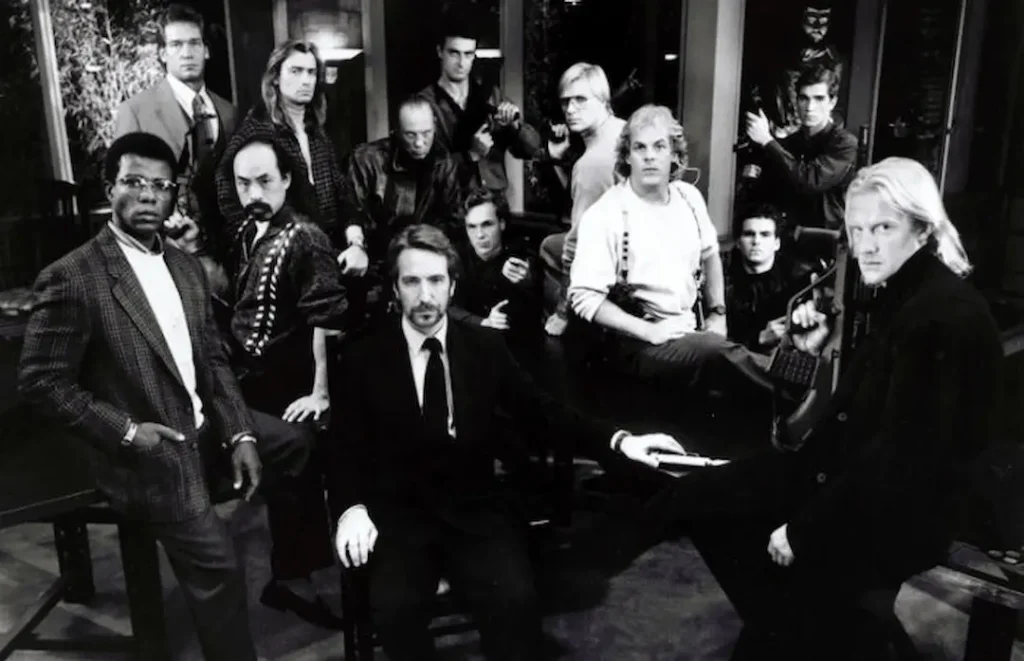
More than 35 years later, Die Hard remains a masterclass in character-driven action cinema.
Its influence echoes through hundreds of imitators – Speed, Air Force One, Under Siege – yet none capture its mix of humanity, humour and precision.
Whether you watch it as a Christmas tradition, an action benchmark or simply a film that still packs a punch, Die Hardcontinues to offer something new with every revisit.
For the complete discussion – including the Ellis–Holly theories, German-Greek title chaos, classical-education jokes and even a brief mention of the Pope – listen to the full Season 2 premiere on your preferred podcast platform.
🔈 Listen on Apple Podcasts | Spotify | Amazon Music | Castbox | Castro | Overcast | PocketCasts
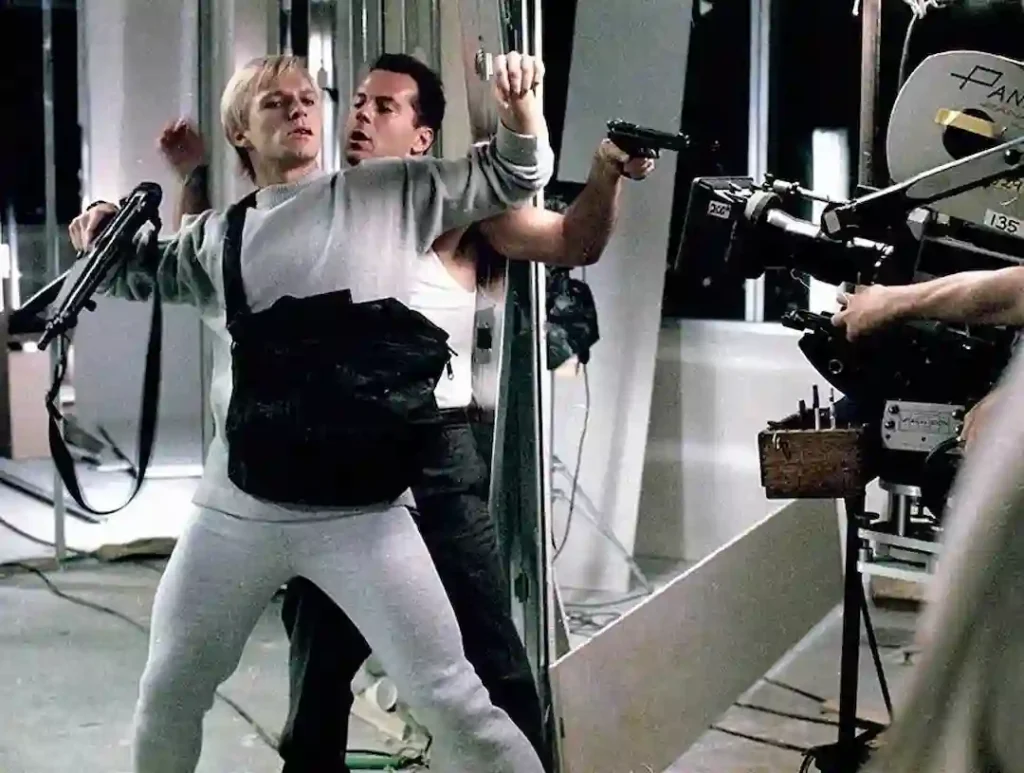
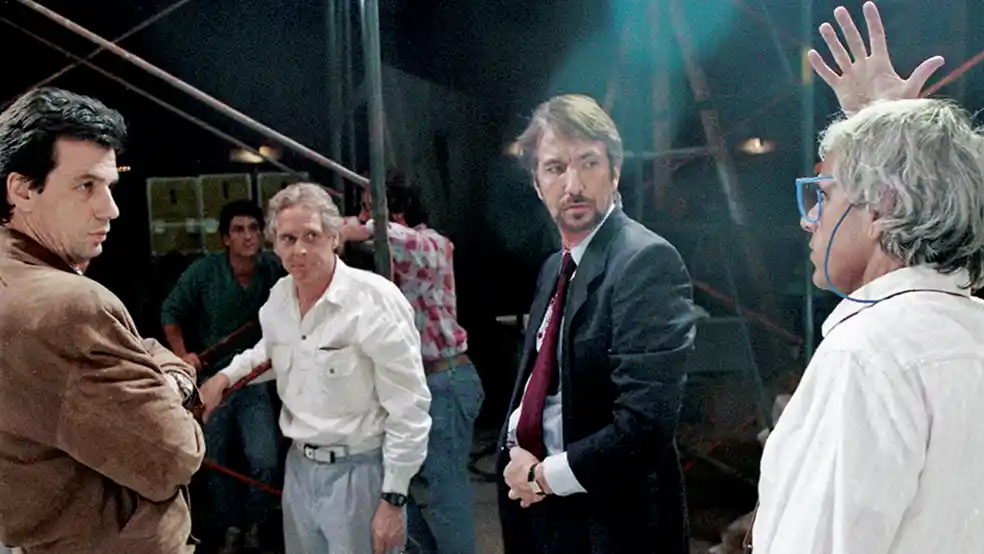
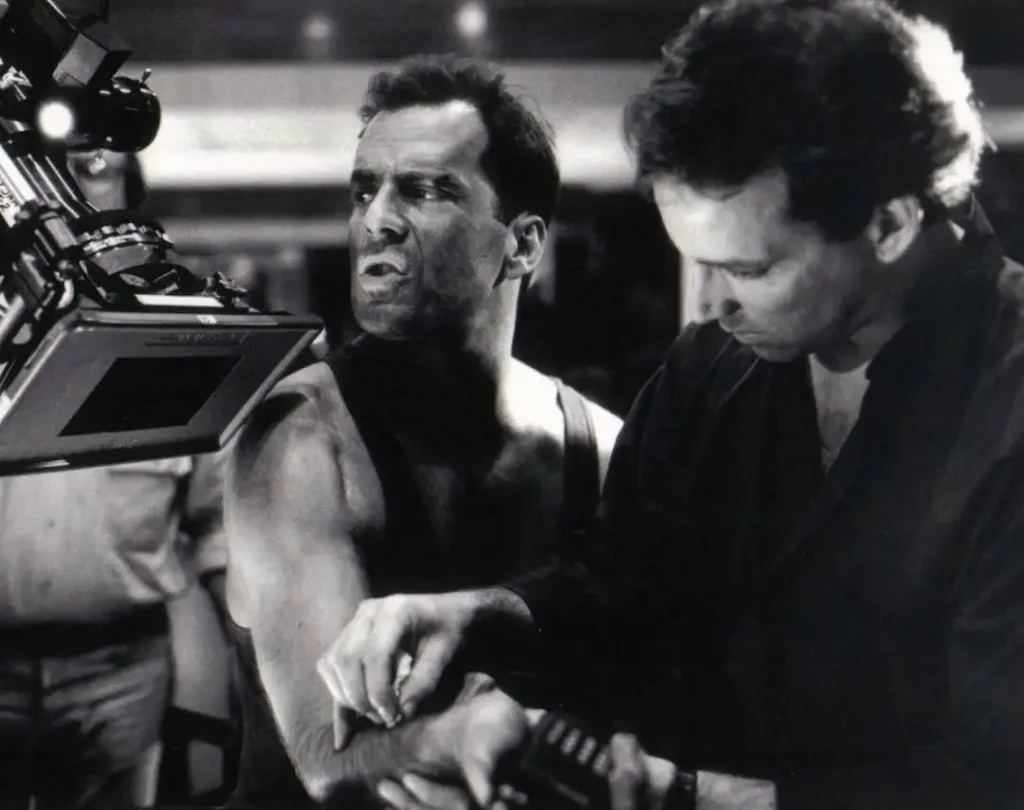
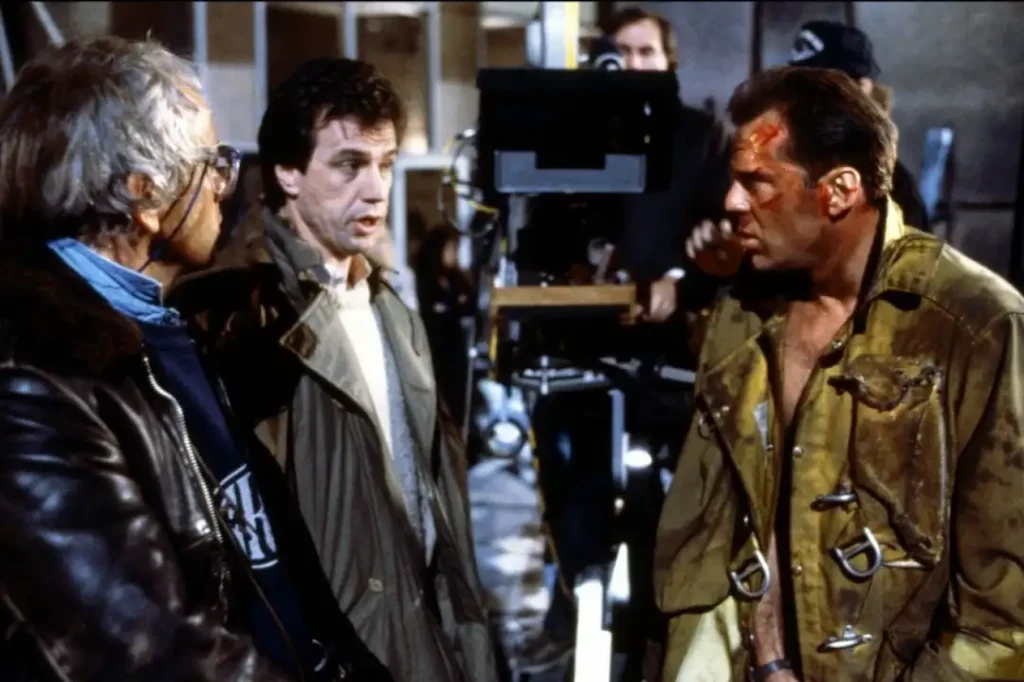
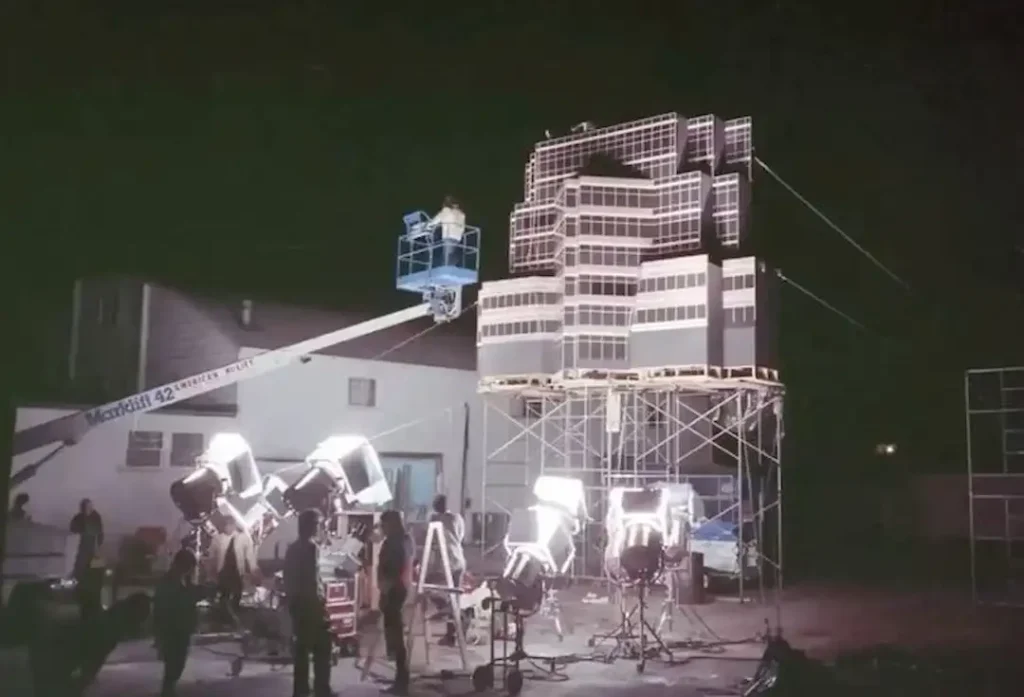
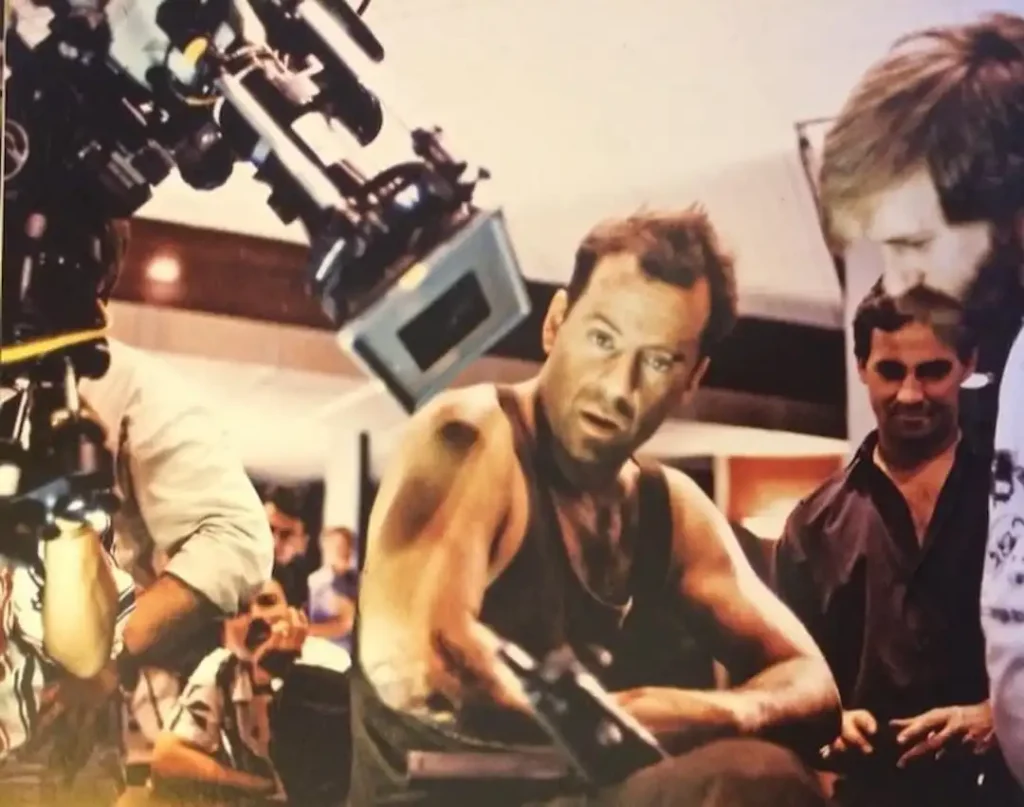
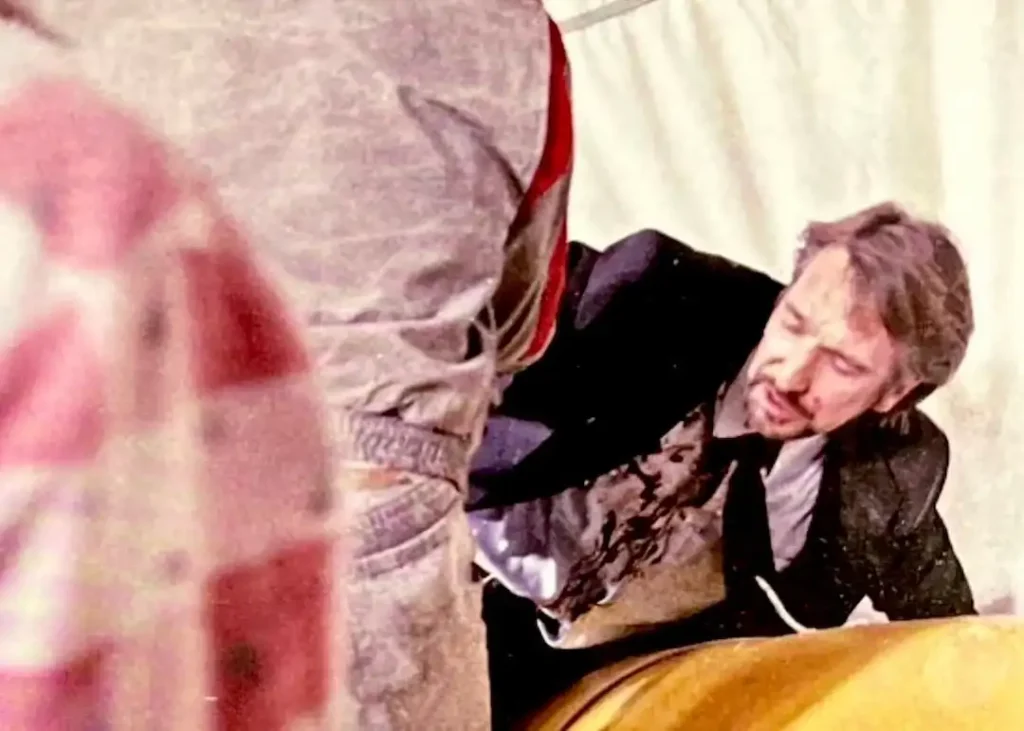
Bonus BTS Photos
READ NEXT: 10 Classic Movie Cops Who Were as Clueless as Frank Drebin